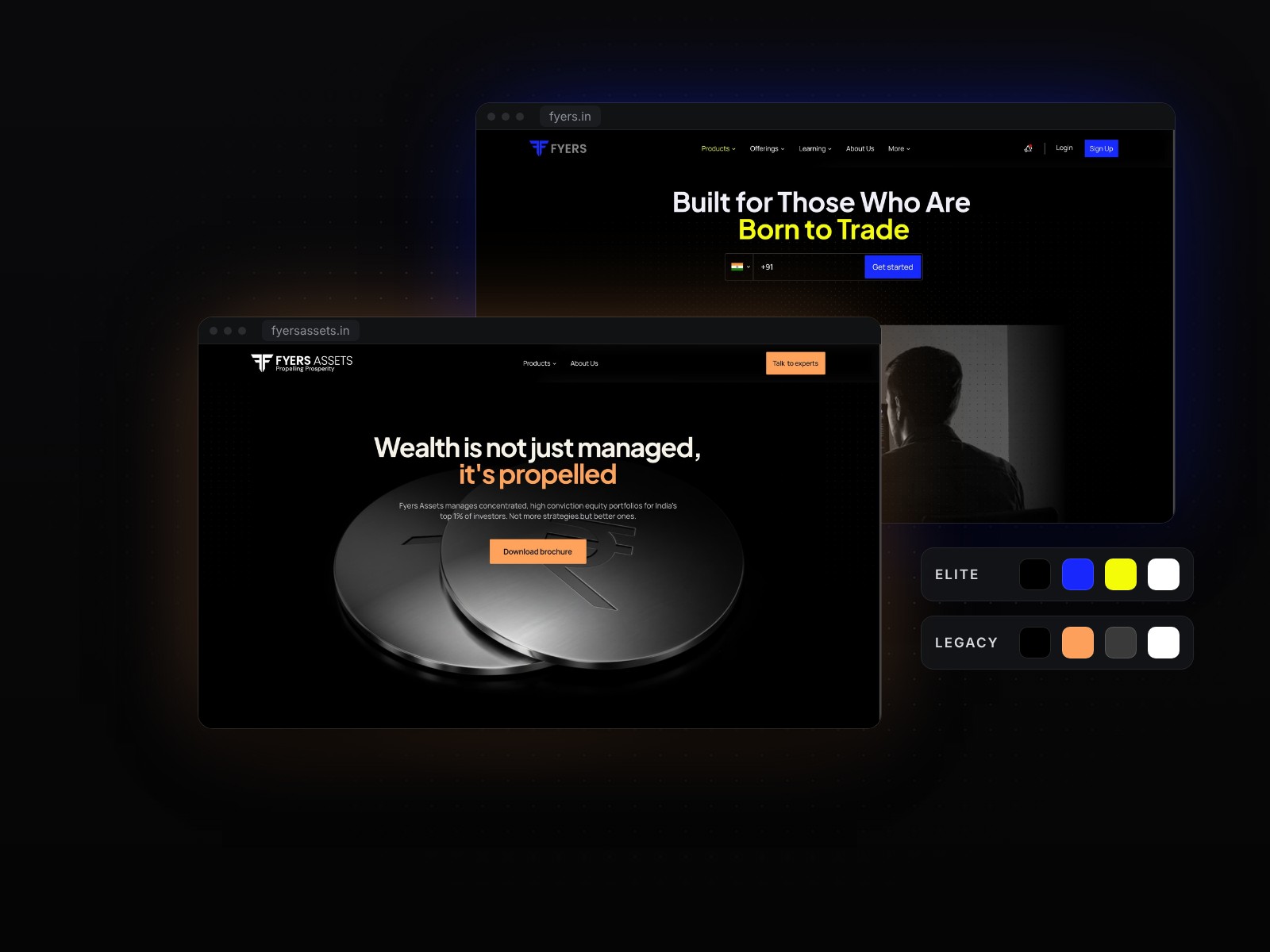
Traders set their strategies as alerts on TradingView, but on FYERS an alert couldn't place an order on its own. I designed Webhooks, on web and app, so a trader can generate a webhook URL, build the order without writing code, and see what happened to every alert.
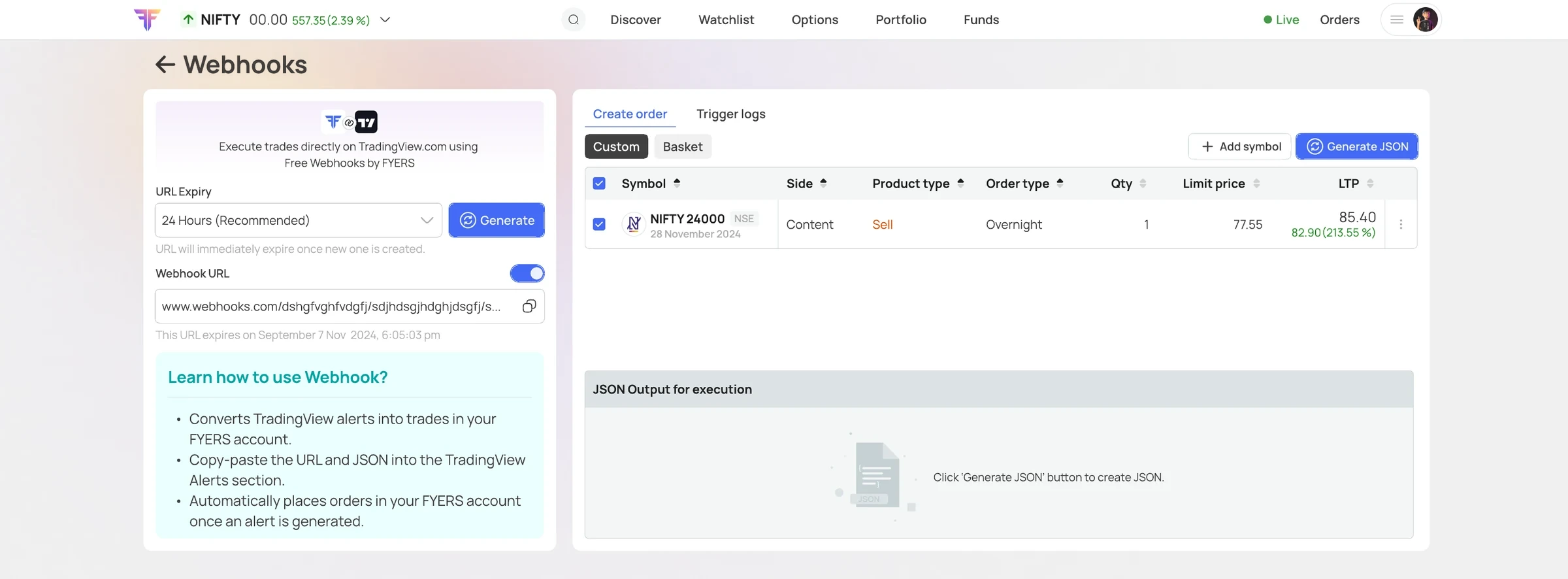
A TradingView alert couldn't place a FYERS order by itself. Traders who asked for a webhook URL were pointed to API Bridge, a separate download that ran through a Chrome extension.
I took the requirement from the product owner and designed Webhooks on web and app, over 2–3 weeks of meetings and iterations.
Generate the URL inside FYERS, build the order on screen instead of in hand-written JSON, and log every alert so a failed trade always has a reason.
The design was finished in 2–3 weeks. About two weeks later, Webhooks grew into a bigger project: FYERS Automate.
A TradingView alert can call a web address the moment a price condition is met. Something on the other end still has to turn that call into an order.
On FYERS, that something didn't exist. In October 2024, when a trader asked FYERS for a webhook URL to use with TradingView, the answer was API Bridge: a separate download that ran through a Chrome extension. The other route was running your own server on the FYERS API and typing every alert message by hand, as exact JSON.
Other brokers had moved first. Dhan and 5paisa already gave traders a ready-made webhook URL, and SEBI's new rules for retail algo trading, announced in February 2025, were about to make home-built servers and bridges harder to run.
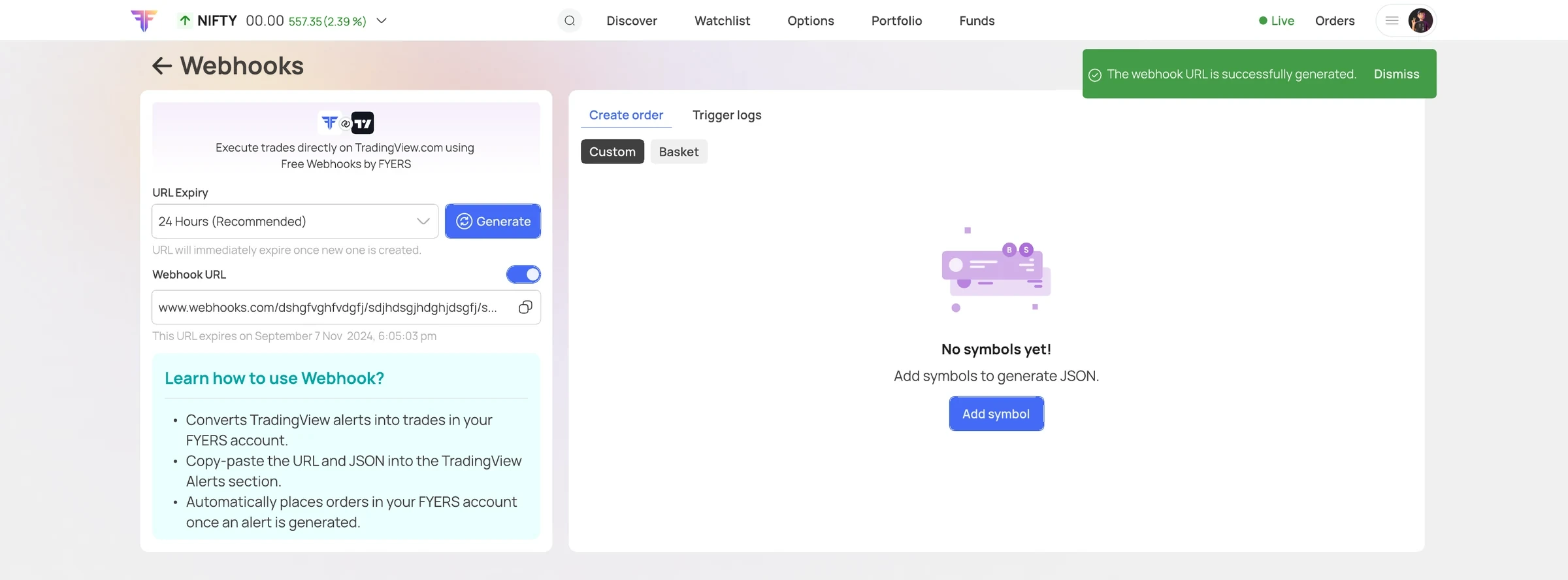
The requirement came to me from the product owner. I went through it, designed Webhooks on web and app, and kept refining it over several meetings and rounds of iteration until we understood the problem well and the design held up. Design took 2–3 weeks, iterations included.
It started from the product owner's requirement. These are the calls that shaped the design through those rounds.
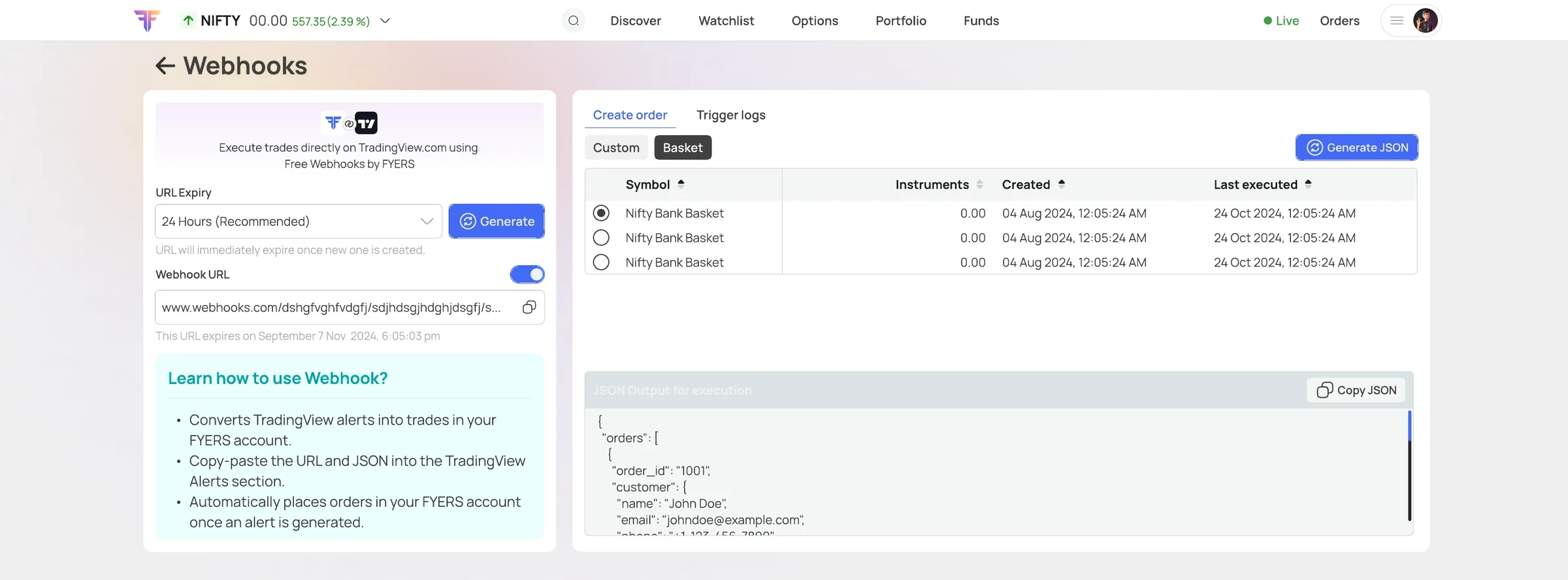
Build the order on screen and let FYERS write the JSON: add a symbol, set side, product, order type, quantity and price, then copy the result.
Recommend a 24-hour expiry, offer 7, 15 and 30 days, and say plainly that a new URL ends the old one.
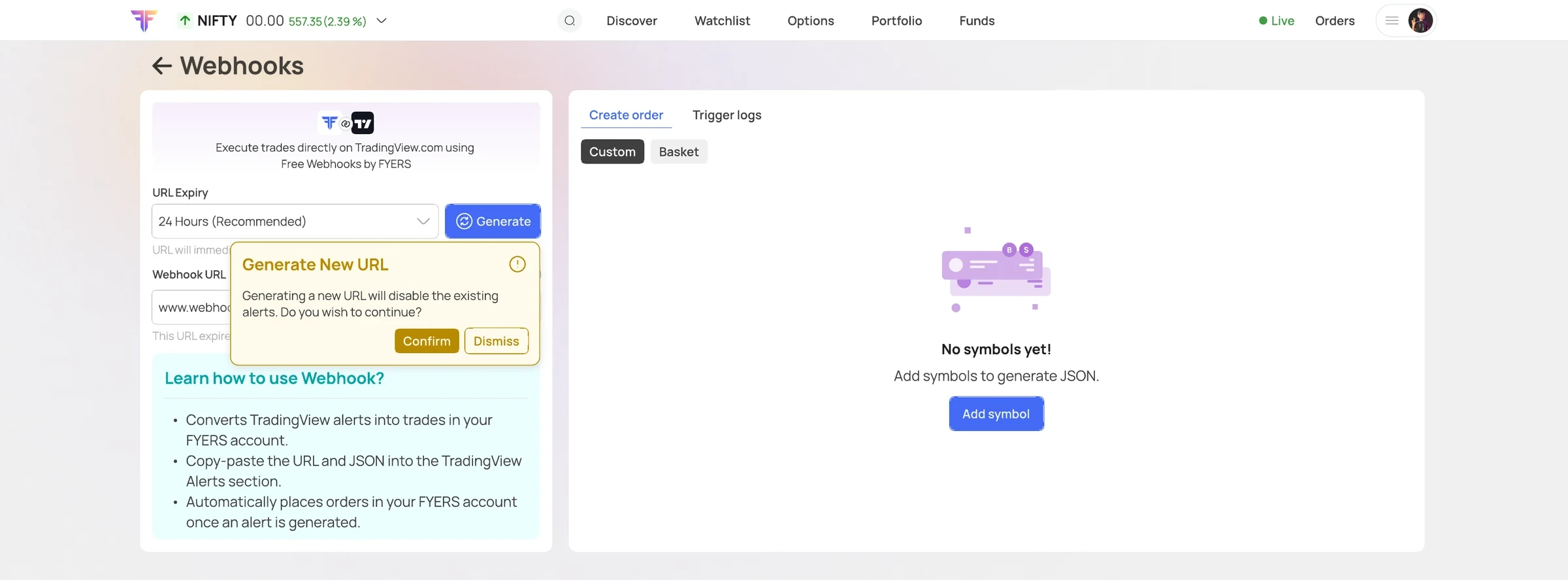
Ask before anything that would stop live alerts: generating a new URL or turning the current one off.
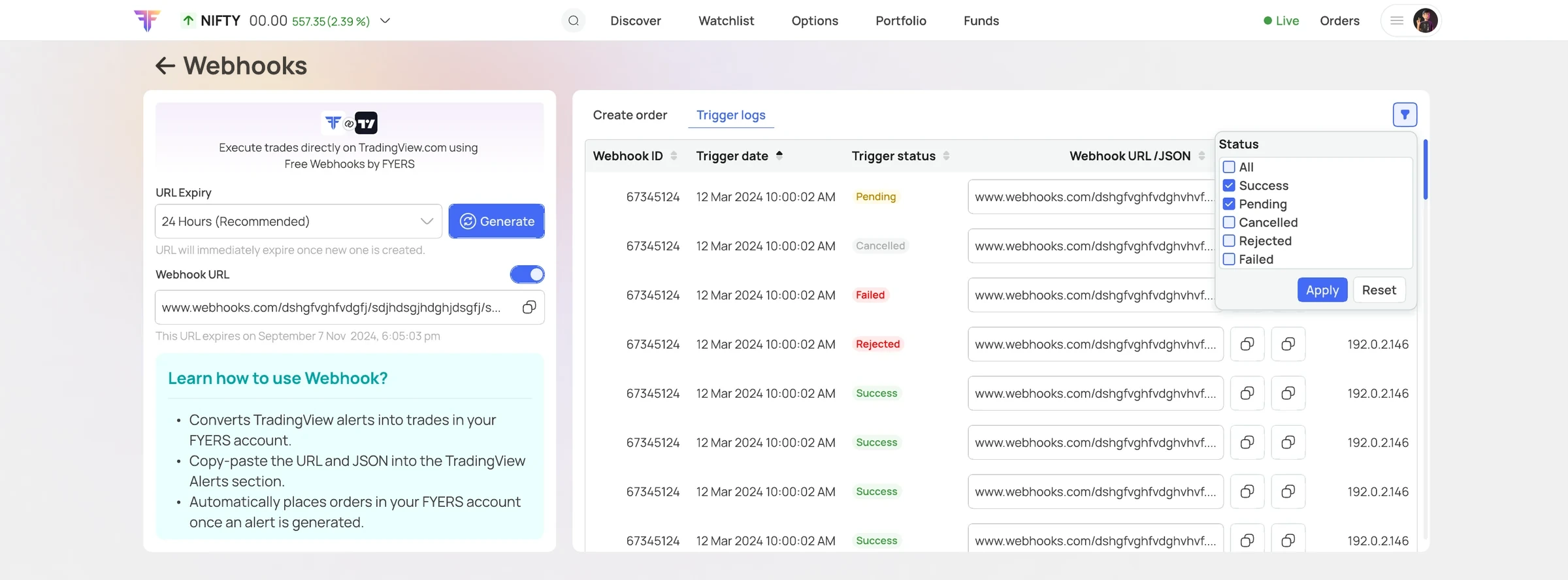
Log every alert with its status (success, pending, cancelled, rejected or failed) and let traders filter by it.
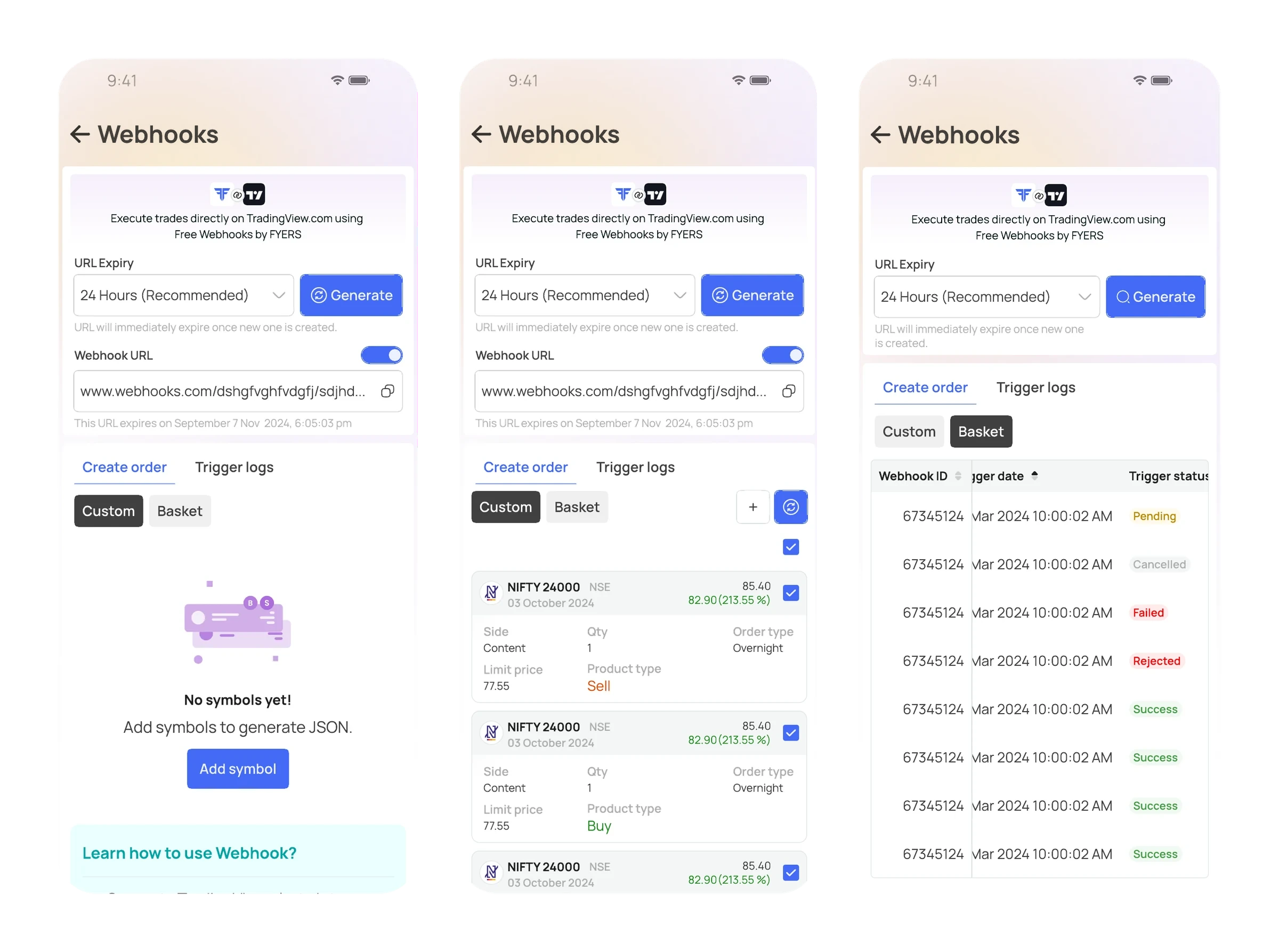
Keep the same tool on the phone: tables become cards, and row actions move into a bottom sheet.
Webhooks never shipped as a page of its own. About two weeks after the design was finished, it grew into a bigger project: FYERS Automate, a no-code workflow builder where a webhook is one of the ways a workflow can start.
The design held up through that change because it wasn't one page bolted together. It was three parts, each answering one question: where the alert comes in (the URL and its expiry), what it does (the order builder), and what happened (the trigger log). Any automation has to answer the same three questions, so the thinking moved into a bigger frame instead of starting again.
Webhooks didn't ship on its own. Two weeks after the design was done, it grew into FYERS Automate, the no-code workflow builder FYERS announced in January 2026.
So there are no usage numbers for Webhooks by itself. What it left behind was a worked-out answer to the hard parts of alert-driven trading: a URL that is safe to hand to another site, an order a non-developer can build, and a record of every trigger. That answer was ready when the idea grew into a bigger product.
- Design the parts, not just the page. Webhooks was planned as one screen, but because the URL, the order and the log were separate pieces, the work still counted when the project changed shape.
- When a mistake costs real money, show the consequence before the click. The expiry, the confirmation and the log are the same idea applied in three places.
- Hide the format, not the control. Traders didn't need to learn JSON. They needed the fields they already use to place an order, with the code written for them.