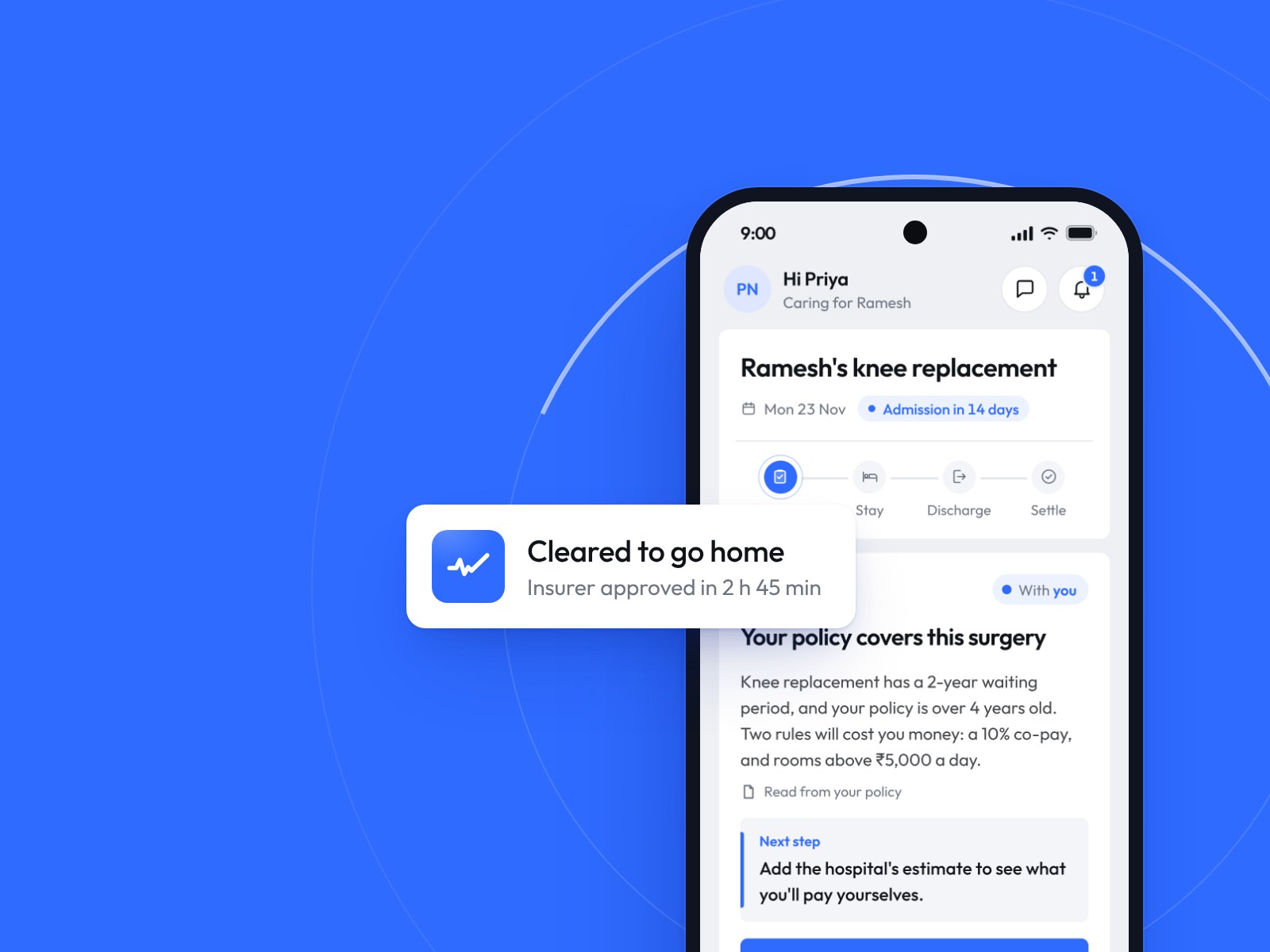
A working prototype of a goal-based savings app with an AI coach. It reads your accounts with consent, shows where each goal really stands, and suggests changes it can explain. It never moves money.
Can an AI coach help people save for goals they care about, without becoming one more app that guesses, nags or sells?
Problem framing, the system’s rules, UX and visual design, motion, and directing AI to build and test the prototype.
Write the rules first (what the app may see, say and change), build every scenario on real numbers, then audit it the way a hiring panel would.
A clickable prototype with five scenarios and an AI coach that answers from your own data. I also found and triaged 78 dead ends before anyone else saw them.
Most people know what they want to save for. The plan falls apart in month three, when life does something the spreadsheet didn’t expect.
Budgeting apps track what already happened. They rarely say what a good month means for a goal, or what a bad one should change. I wanted to see whether an AI layer on top of a person’s real accounts could turn each month into one clear, explainable next step, while every decision stays with the person.
₹85,000 in.
₹15,000 to plan with.
I wrote the rules before any screen: what the app can see, what it can say, and what it must never do.
Account data comes read-only through India’s Account Aggregator framework, with a statement upload for co-op banks that aren’t on it yet. Goal money is a label inside the person’s own bank, never a transfer. The coach answers only from linked data, shows its sources, declines stock tips and changes nothing until the person applies a plan. Then I mapped one month across six moments, and where a plan usually breaks in each.
One salary, six moments, one plan
{{p.num}}{{p.name}}
- 0
- rupees the app can move on its own
- 5
- scenarios, from a first open to a salary that drops
- 78
- dead ends found in my own audit, then triaged
I worked with Claude as a design partner and builder. I set the rules and the bar, it drafted, and I reviewed every screen, then tried to break it.
The coach never moves money.
Trust is the product. The coach runs what-ifs on your real numbers and proposes a plan, but nothing changes until you apply it, and every change can be undone. When a question needs a SEBI-registered adviser, it says so Guidance, not advice
It can’t act for you or pick investments, so some answers end with what it can show you instead of a tip.
From there I worked in short loops on each screen: a calm dark system with one accent kept for AI and progress, motion only where it explains a change (a tick that draws, a ring that fills to what’s saved, a chart that labels every month), and copy that states facts instead of praise.
Every suggestion shows why
A working prototype across five scenarios, from linking accounts to a salary that drops. Then I reviewed it the way a hiring panel would.
That audit found 78 dead ends: numbers that disagreed between screens, links that went nowhere, and states the app could get stuck in. I fixed the 25 that mattered most, in four batches, and wrote a one-line defence for each of the rest.
When life changes, the plan follows
Try Wealth Flow yourself
Link accounts, set a first goal, act on an insight, ask the coach a what-if and see what happens when a salary drops.
- Writing the rules first, what the app may see, say and change, made every screen easier. Most of the hard decisions had already been made.
- An AI coach earns trust through what it refuses to do and how easily it can be undone, not through how much it knows.
- Reviewing my own prototype like a hiring panel found more than any single design pass. In a money app, the same number has to agree on every screen.
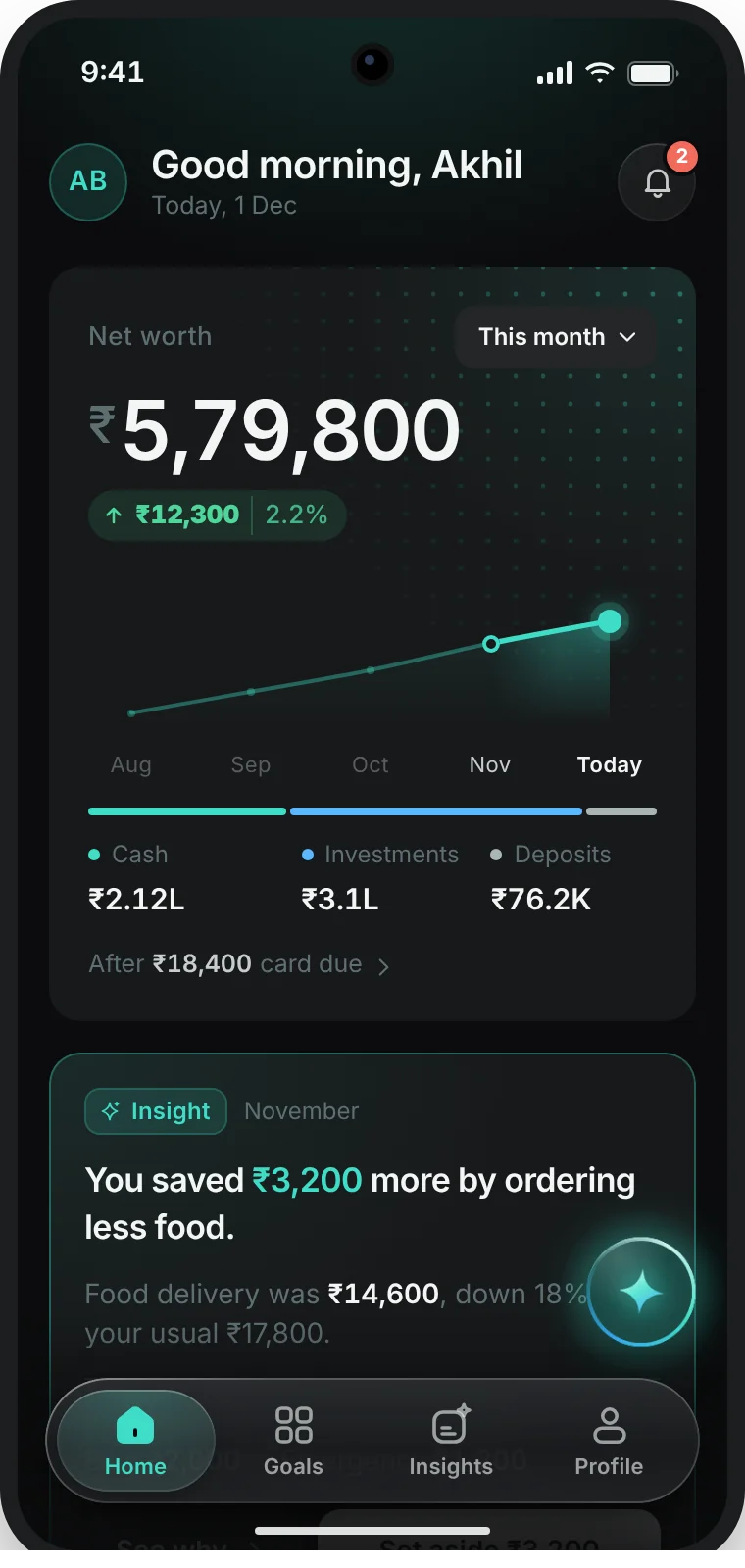
Take Wealth Flow for a spin
A working build of the app, with a fictional person, bank and numbers.
- 5 scenarios
- 4 minutes
- Nothing is sent
- Pick a momentUse the scenarios beside the phone, from linking accounts to a salary that drops.
- Use it like a real appSheets, sliders, goals and undo all work. Every number updates as you go.
- Ask the coachTry a what-if, a purchase, or a stock tip to see where it stops.